Issue #001 Emberlith
Plant managers can price their own switch off gas, then check the machine on a datasheet drawn to scale.
Concept project · Launch Site · 2026
The problem
Emberlith is made up. The problem isn't. Hard-tech startups build machines that run at 1,000°C, then launch a site that could be selling anything.
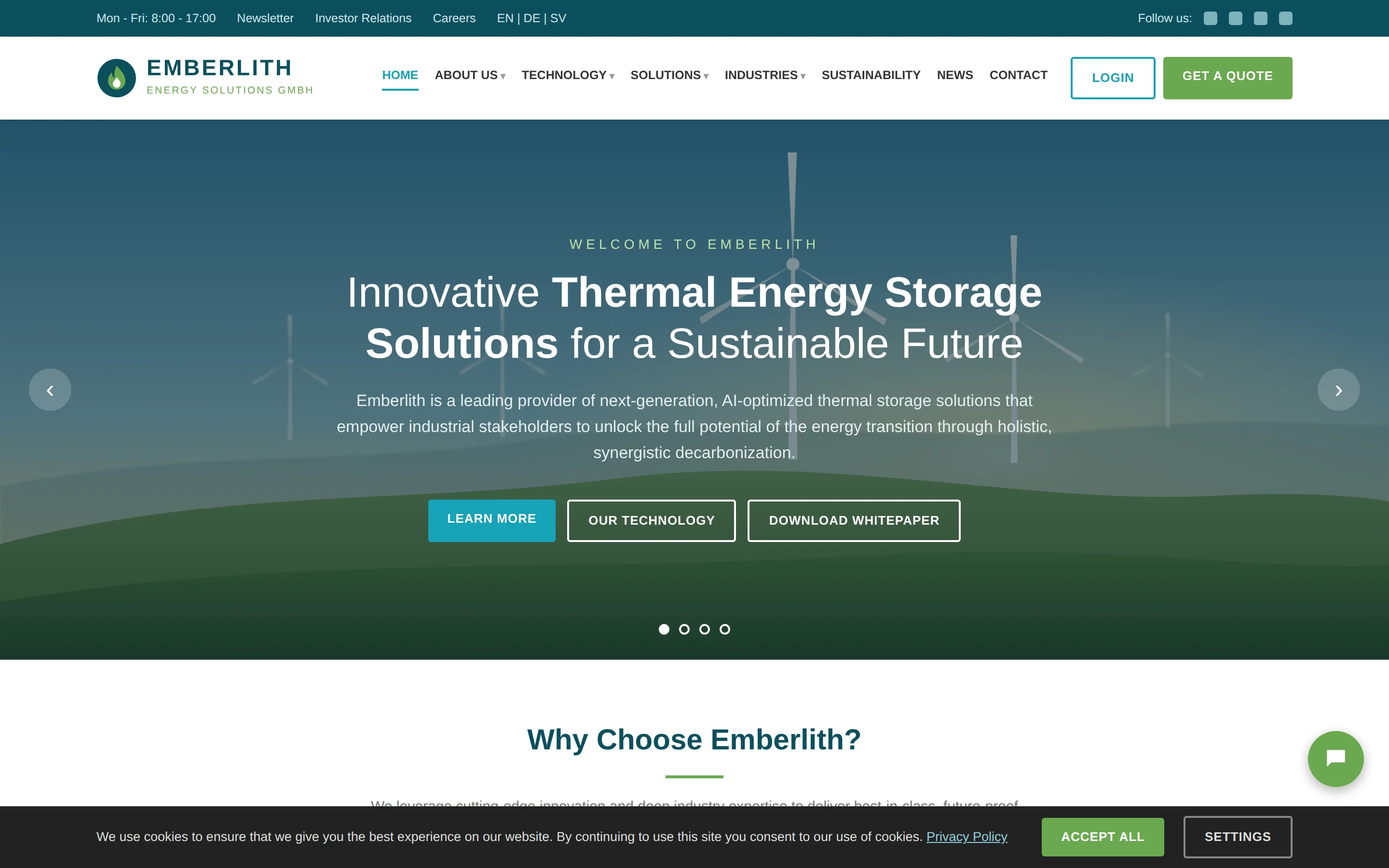
The hero says "innovative solutions for a sustainable future", which could sell yogurt, over a stock photo of wind turbines. The product is a box of hot brick. The buyer runs a plant with a gas bill, and nobody talks to them in tonnes of steam.
So I set myself a brief: make a thermal battery look like a consumer brand, and keep a datasheet an engineer would sign off.
The cast
- The buyer
- A plant manager with a gas bill, who buys steam by the tonne and heat by the MWh.
- The skeptic
- The engineer who has to sign off the datasheet.
- The hero
- Core E1: brick in a steel box, heated to 1,100°C on cheap wind and solar power.
- The villain
- The gas boiler, and its bill.
The plan
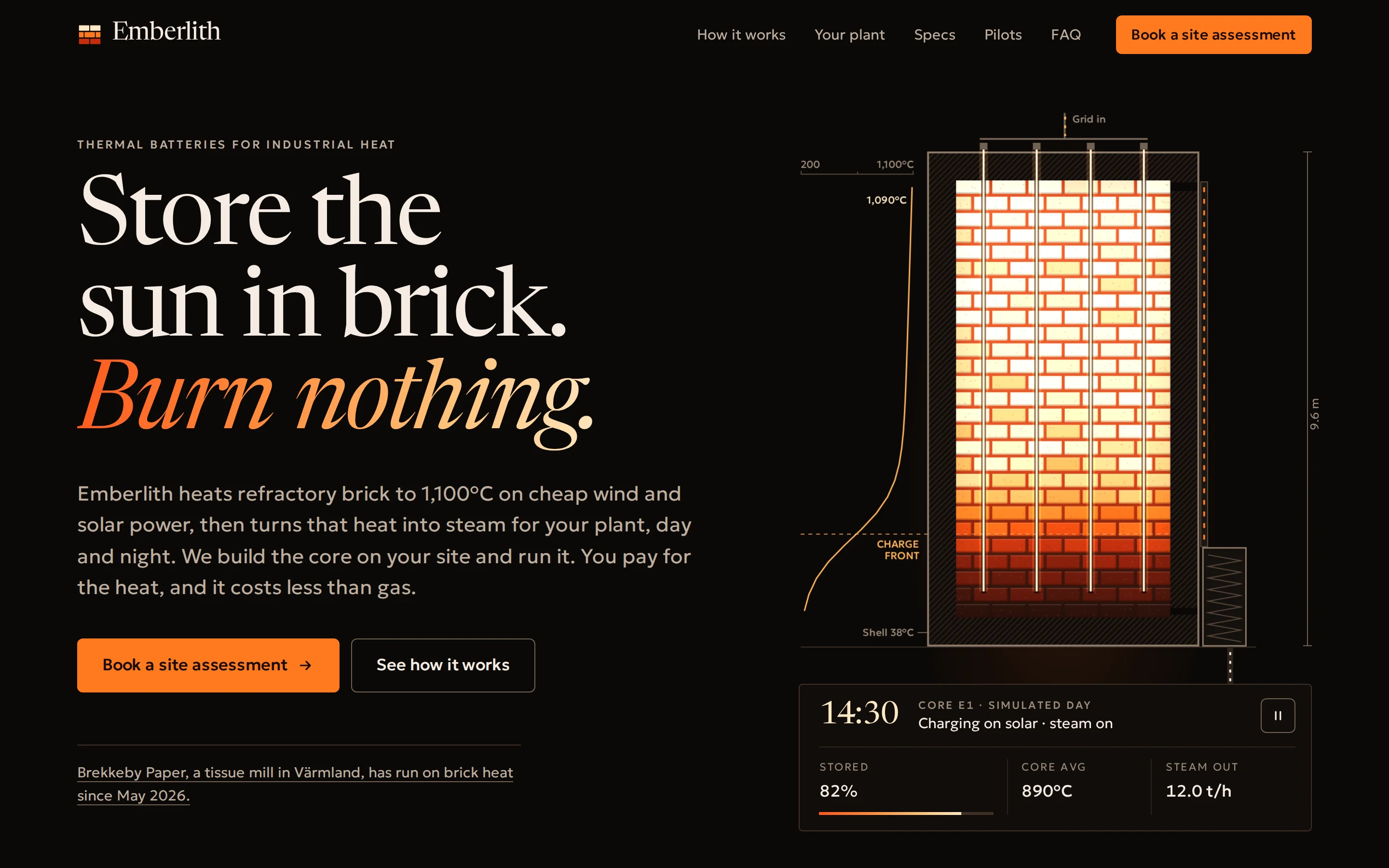
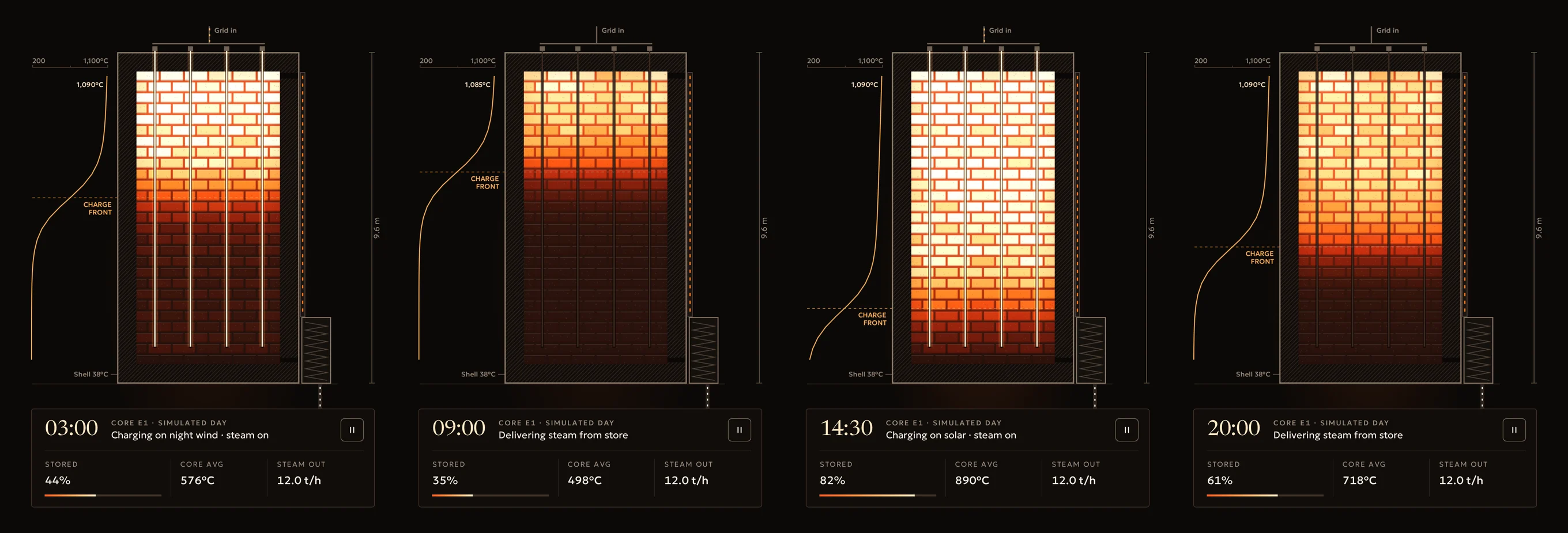
- Show the machine. The hero is a live section through the core: the rods glow while it charges, the heat creeps down the brick, and hot air runs down a duct to the steam generator. You see the product before you read a word.
- Speak plant manager. They buy steam by the tonne and heat by the MWh, so the calculator, a sample heat bill and the datasheet all use those units.
- Look expensive. It's near black, and the colors come from heat, ember red to white. Only hot things glow. The one gradient sits on the brick, the stored-heat meter and "Burn nothing."
The build
One long page, hand-built. HTML, CSS and 47 KB of plain JavaScript. No framework, no images: every visual is canvas, SVG or CSS.
The core is 67 to 175 bricks on a canvas, depending on the screen, each colored by the temperature at its height. The same temperatures are drawn beside the stack as a curve, and the dashed charge front sits where it crosses 650°C, so the bend in the curve and the change in the brick line up. Steam runs from the generator into the readout's "Steam out" at 12 t/h, all day, charging or not.
It runs at 30 frames a second, and a frame's code takes about 0.3 ms, or 1.4 ms with the CPU slowed down four times. It stops when it scrolls away or the tab hides. On first load it starts up: the rods switch on one by one and the heat sweeps down to mid-afternoon before the clock starts. Reduced motion gets one still frame.
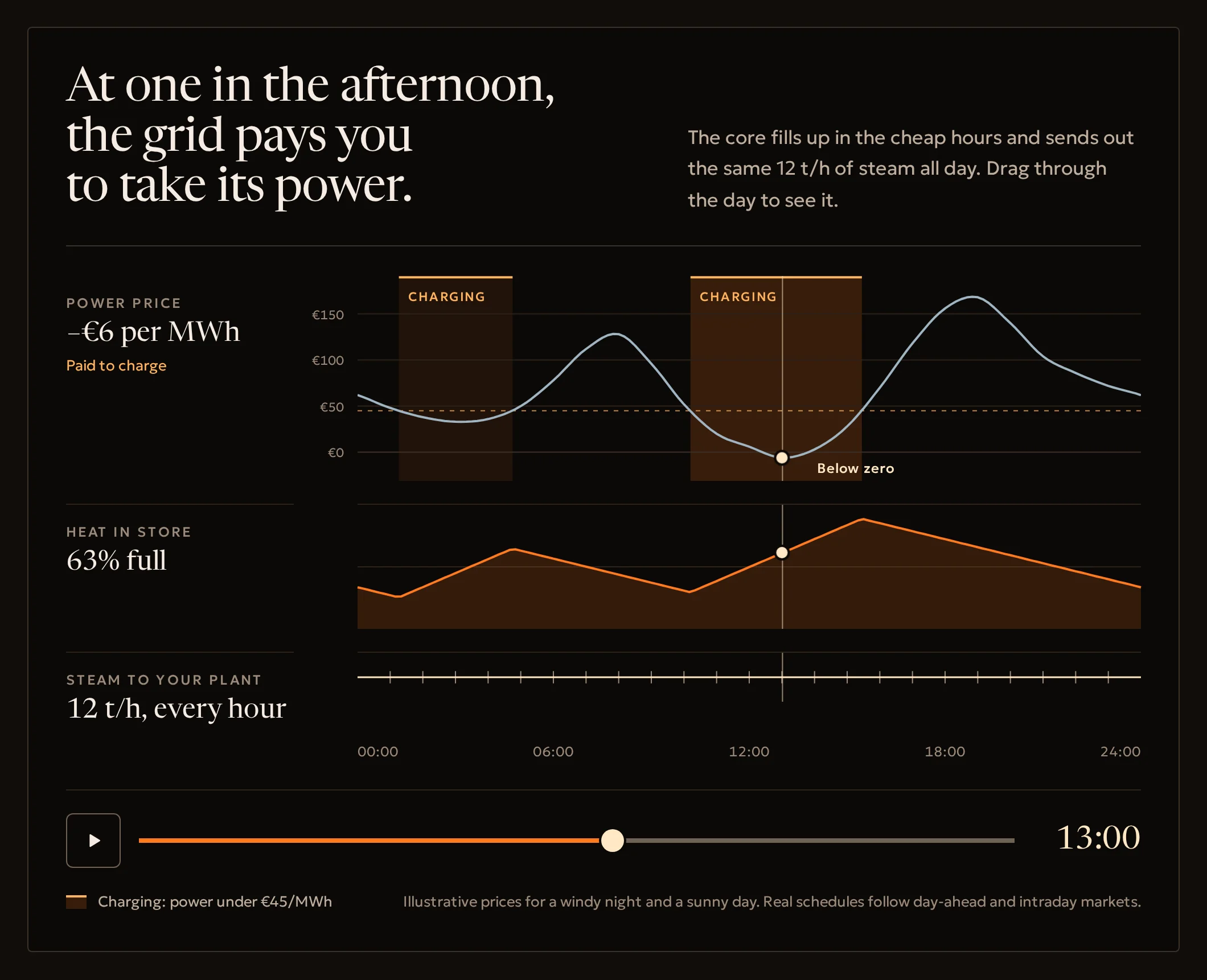
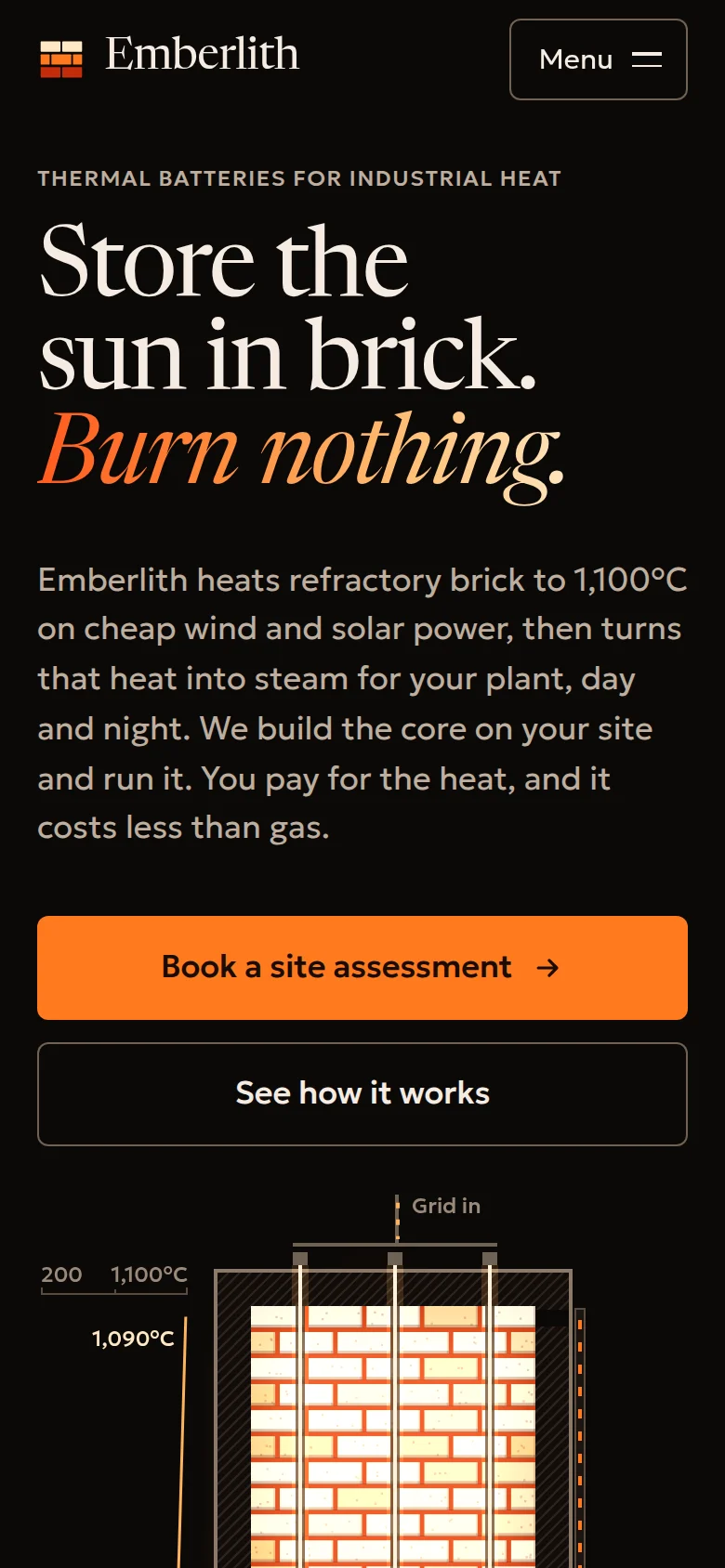
On a phone the chart, the calculator and the drawing run edge to edge. A sideways drag scrubs the day, a tap on a line of the key lights its callout, and the drawing sets its dimensions bigger and drops the title block it has no room for. Turned on its side, the phone gets the desktop's cover: the headline beside the core.
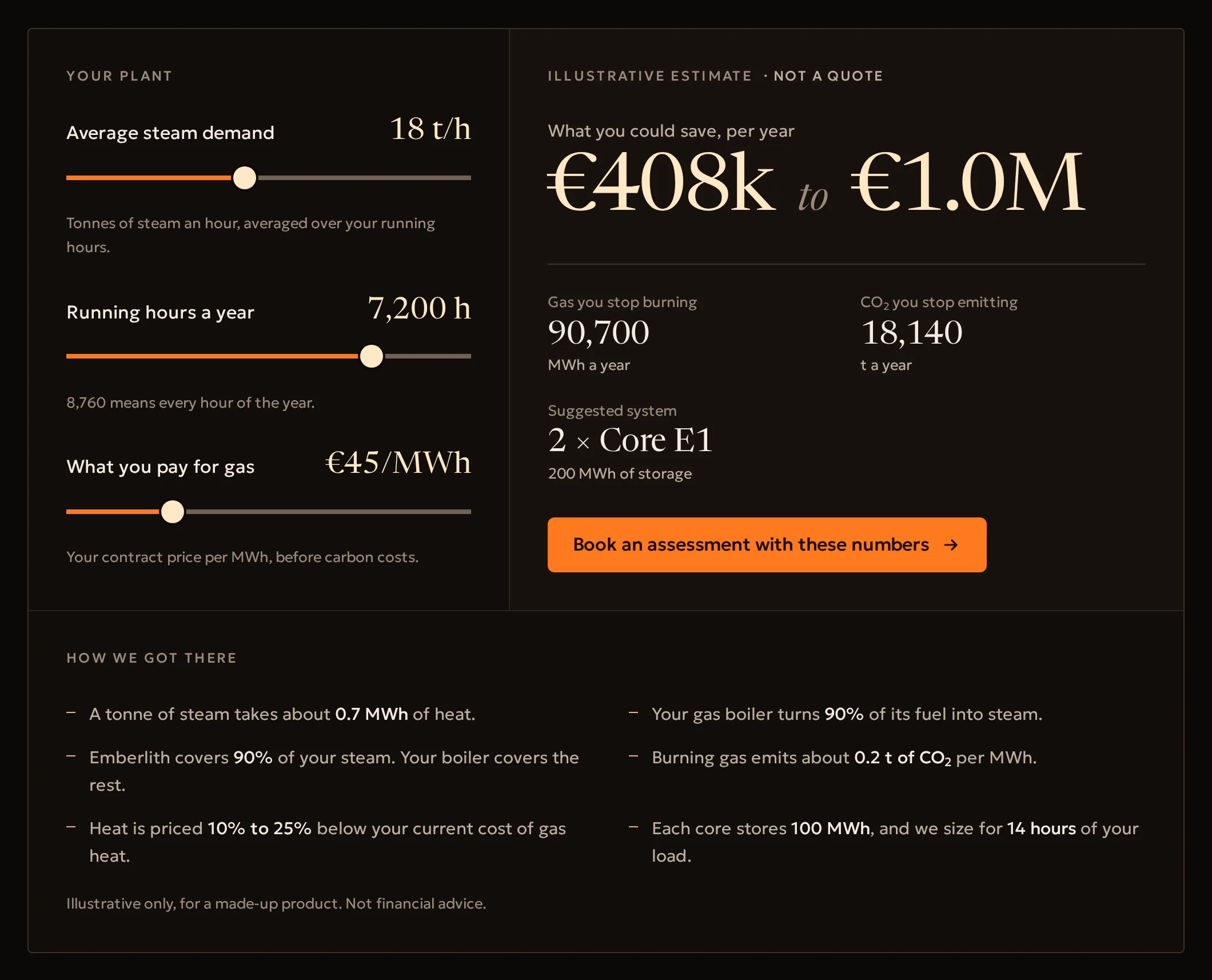
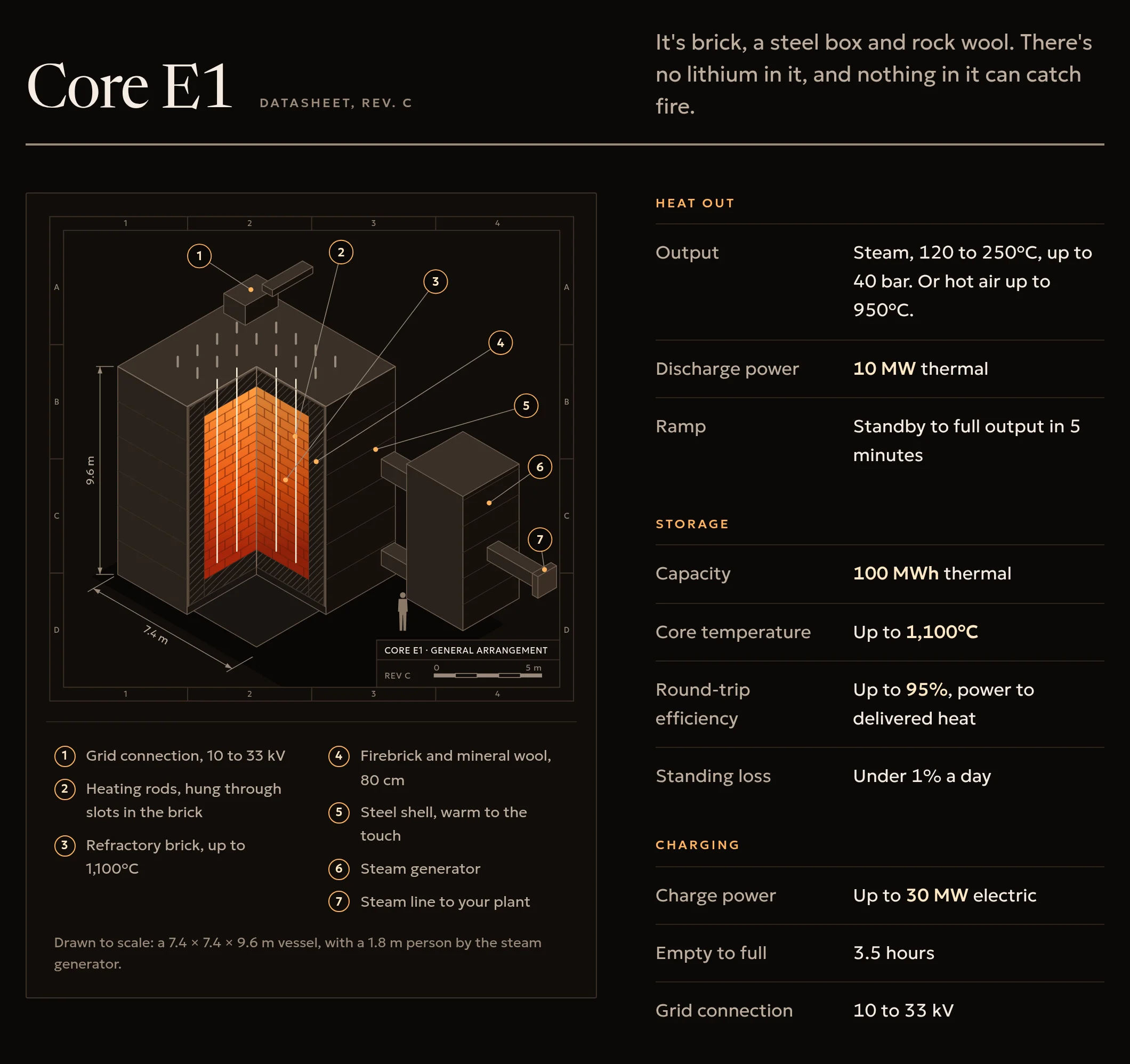
The brick joints in the drawing are one SVG pattern, projected onto each face. That keeps the whole drawing, sheet and title block included, to 12 KB.
- Kiln#0C0907The warm black everything sits on
- Ember#C42D0CThe coolest glow
- Flame#FF7A1FHeat, and the main button
- Amber#FFB35CLabels and focus rings
- White heat#FFE8C4Readouts and results
- Lighthouse performance, desktop
- 100
- Lighthouse performance, mobile
- 99
- Whole page, gzipped, fonts included
- 108 KB
- Layout shift
- 0
Go poke around
- Scrub the day on the grid chart, or press play.
- Put your own plant's numbers into the calculator.
- Point at a line of the datasheet's key to light its callout.
heyim.london/demos/emberlith/
Before / after
From "innovative solutions for a sustainable future" to "Store the sun in brick. Burn nothing."
Next issue

Your startup, next issue?
Send a brief. I reply within 24 hours with a plan and a price.